
Keeping Emissions in Check: Maintenance Strategies to Meet Environmental Regulations
 Staying under permitted limits isn’t just about passing a stack test. It’s about keeping your combustion equipment tuned, sealed, and verified day after day. The right maintenance plan keeps CO and NOx in line, prevents unplanned shutdowns, and reduces the risk of fines or forced downtime. Here’s a practical, plant-friendly playbook you can put to work now.
1) Prioritize Routine Burner Tune-Ups and Flame Safety Checks
Small drifts in fuel/air delivery and sensor accuracy can add up to big compliance headaches. A scheduled tune-up cadence keeps combustion consistent across the full firing range.
What to do:
- Tune at low, mid, and high fire to confirm stability and emissions at each point
- Verify pilot integrity, ignition energy, and flame signal strength
- Check burner tile/port condition, refractory, and flame shape
- Validate flame safeguard setpoints and response times (trips, resets, proof-of-closure)
- Re-baseline CO/NOx/O₂ and record updated tuning curves
What you’ll prevent:
- Unstable flame signals that trigger nuisance trips and oscillating emissions
- Spikes in CO or NOx caused by drifted setpoints or fouled components
- Unexpected burner lockouts that halt production and jeopardize permit conditions
2) Watch the Data: Trend Emissions & Key Combustion Indicators
Your best early-warning system is often already in your PLC or historian. Trend the variables that move emissions first.
Track and alarm on:
- CO, NOx, O₂ (from CEMS or portable analyzers)
- Burner fuel pressure, valve positions, and actuator travel
- Combustion air header pressure and blower amperage
- Stack temperature and heat-input rates
- Flame signal microamps/UV response
When to investigate:
- Any deviation from baseline curves at a fixed load
- CO rise during steady operation (often a sign of air starvation or nozzle fouling)
- NOx creep after tune-ups (incorrect air/fuel ratio)
- Repeated short cycling or longer light-off times
3) Eliminate Hidden Leaks in the Fuel Train
Fuel leaks and air infiltration change the mixture you think you’re delivering. Routine leak checks catch problems before they become safety or compliance issues.
Proven methods:
- Pressure decay tests of valve trains, regulators, and lines
- Ultrasonic leak detection around flanges, unions, and instrument taps
- Soap solution spot checks for quick validation during walkdowns
- Inspect and replace worn gaskets, diaphragm regulators, and soft seats
Benefits:
- Tighter control of air-fuel ratio
- Faster, more reliable light-offs
- Reduced risk of unburned fuel
4) Verify Proper Operation of Air-Fuel Ratio Controls
Whether you’re running mechanical linkages, parallel positioning, ratio regulators, staged firing, or oxygen-trimmed controls—synchronization is everything.
What to verify:
- Correct response across load changes (no lag, no overshoot)
- Tight feedback loop between control system and actuators (command = position)
- Alignment with current tuning curves and verified bias/characterization tables
Why it matters:
- Air-fuel ratio imbalances are a leading cause of combustion-related emission spikes. Keeping drives, dampers, and valves in sync maintains stable flames and cleaner exhaust.
5) Maintain the Combustion Air Supply System
Air quality and quantity make or break combustion performance. A clean, responsive air train keeps CO down and efficiency up.
Maintenance steps:
- Clean or replace intake filters on a fixed schedule
- Inspect damper actuators for calibration drift, backlash, and link wear
- Balance airflows in multi-burner systems to equalize O₂ and flame shape
- Check for vibration and belt wear on combustion air blowers; verify sheave alignment and tension
- Confirm no duct leakage that could starve burners at high fire
Result:
- Proper air supply is the foundation of compliant, efficient combustion.
6) Keep Instruments Honest: Calibrate, Clean, Replace
If the sensors lie, your control loops will, too.
Best practices:
- Schedule calibrations for O₂ probes, pressure transmitters, temperature sensors, and flow devices
- Clean sample lines and filters; replace poisoned or drifted O₂ cells
- Verify analyzer span/zero with certified gases and document results
- Replace suspect UV scanners or flame rods showing weak signals at known-good conditions
Compliance payoff:
- Accurate feedback keeps AFR tight, minimizes excursions, and strengthens your audit trail.
7) Document Every Maintenance and Tune-Up
Regulators increasingly ask for evidence. Tight documentation can be the difference between a smooth audit and corrective action.
Be sure to log:
- Burner tune-up dates and personnel
- Emissions readings (CO/NOx/O₂) at multiple loads with before/after comparisons
- Sensor calibration results and certificates
- Replacement of key components (actuators, regulators, scanners, valves)
- Updated tuning curves and control setpoint changes
Bonus:
- Solid records demonstrate due diligence and, in some jurisdictions, may support emissions credits or extended compliance windows.
Emissions Compliance Is an Ongoing Process
Combustion systems don’t stay in tune forever—and neither do emissions profiles. The most reliable way to avoid permit violations and keep inspectors satisfied is through proactive, repeatable maintenance practices. When emission limits are tight, consistency is key.
Engineered Combustion Systems (ECS) provides combustion system audits, burner tuning services, control upgrades, and emissions compliance support. We help industrial plants stay ahead of environmental regulations while improving efficiency and reliability.
Call (248) 549-1703 or Request a Quote today.
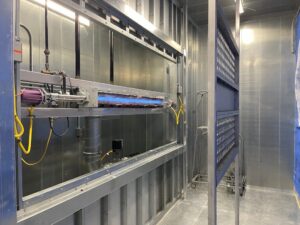 Reducing Emissions with Complete Low NOx Burner Packages